
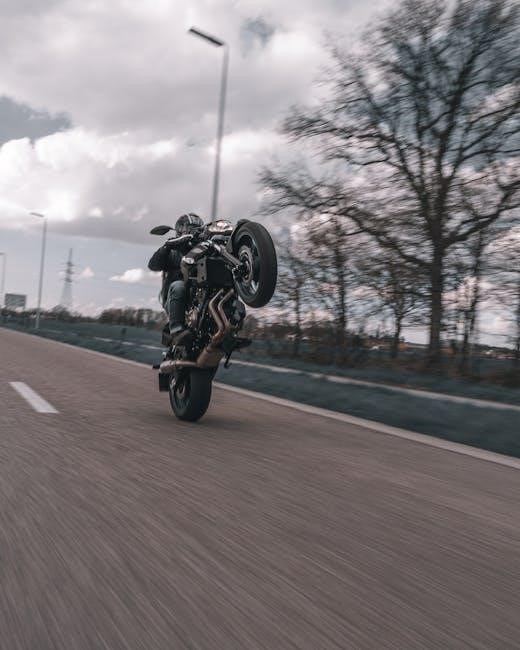
Manuals and wheelies represent fundamental motorcycle control skills, often sought through online resources like ManualsLib, offering extensive PDF documentation.
These techniques, ranging from basic balance to advanced stunts, are readily explored via searchable databases containing over 700,000 files.
What are Manuals?
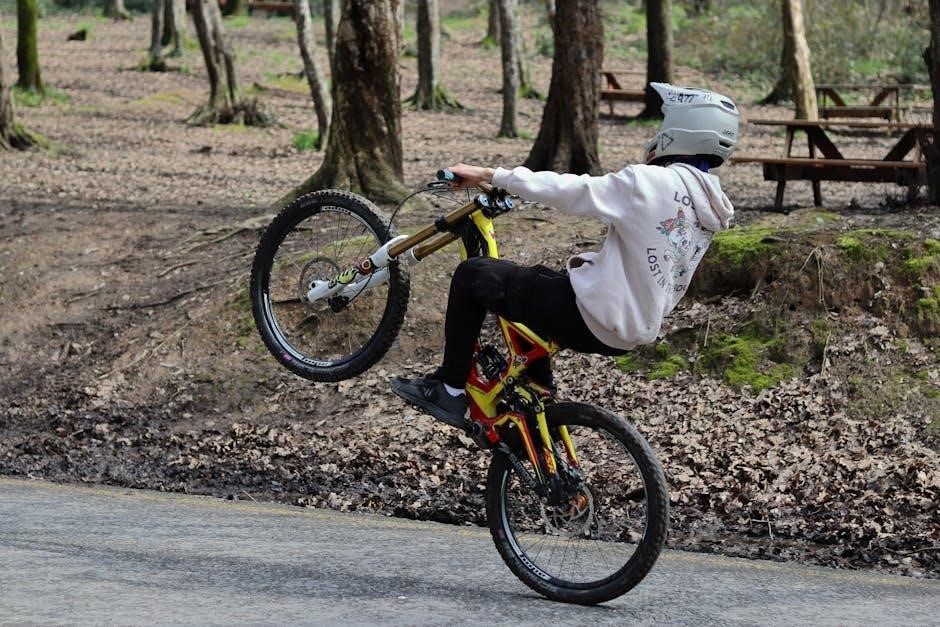
Manuals involve lifting the front wheel of a motorcycle off the ground, maintaining balance using body weight, throttle, and clutch control – a core skill for stunt riding.
Unlike wheelies, manuals prioritize sustained balance without relying on engine power to keep the front wheel elevated. Finding detailed instructions is easy through resources like Manualsdir.ru, boasting over 700,000 PDF files. Mastering manuals builds foundational control, often aiding in learning more complex maneuvers.
What are Wheelies?
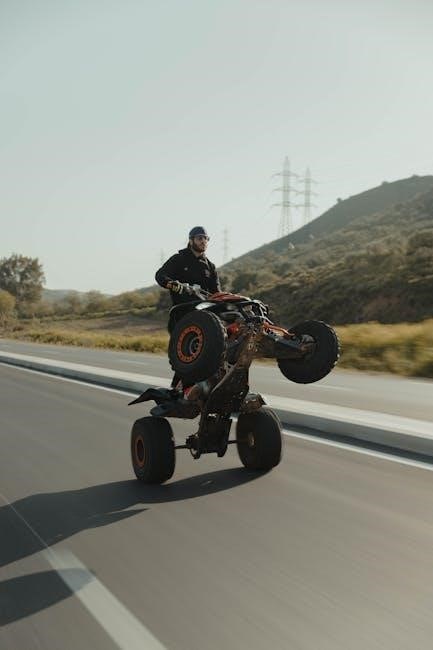
Wheelies are performed by raising the front wheel and sustaining it in the air using engine power and throttle control, differing from manuals which rely more on balance.
Resources like ManualLib.com offer millions of manuals and guides, aiding in understanding the technique. Wheelies demand precise throttle management and clutch coordination, often progressing from clutch-up or power wheelie methods. They represent a visually impressive, yet demanding, motorcycle skill.
The History of Manuals
Manuals evolved alongside motorcycle technology, initially focusing on balance, unlike wheelies which emerged later as a stunt, documented in online resources.
Early Forms of Manuals
Manuals, in their nascent stages, were less about showmanship and more about fundamental control – riders instinctively learning to shift weight and maintain balance. This contrasts with wheelies, which developed later as a distinct, attention-grabbing skill. Early motorcycle instruction focused on safe operation, with balance exercises forming a core component.
These foundational techniques, now accessible through online manuals and guides like those found on Manualsdir.ru, were initially passed down through rider experience and observation, predating extensive documentation.
The Evolution of Manuals with Technology
Initially learned through feel, manuals now benefit from detailed online resources like ManualsLib, offering searchable PDFs and instructional guides. While wheelies remain visually impressive, technology aids understanding of the physics behind both skills.
Digital manuals and video tutorials provide a structured learning path, supplementing practical experience. Access to over 534,584 manuals facilitates skill development, moving beyond solely experiential learning.
The History of Wheelies
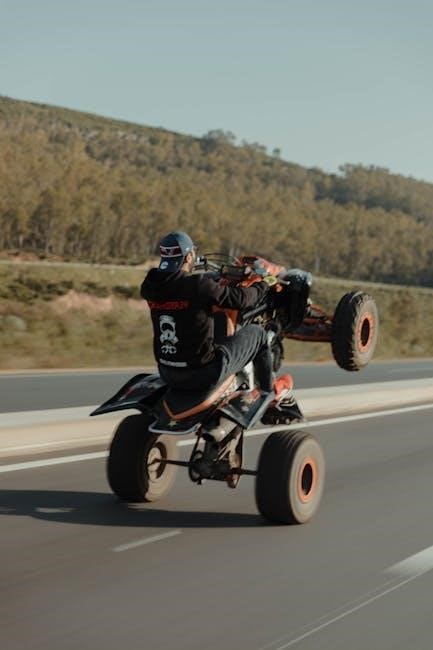
Wheelies originated within motorcycle culture, evolving into a core stunt riding element, documented in resources like Manualsdir.ru, alongside manual techniques.
Origins in Motorcycle Culture
Wheelies emerged as a display of motorcycle mastery, deeply rooted in the burgeoning post-war motorcycle culture. Initially, they were spontaneous expressions of control, evolving beyond simple transportation.
While manuals demonstrate foundational balance, wheelies quickly became a spectacle, often showcased in informal gatherings and early motorcycle events. Both skills, now documented in extensive online manuals and guides, reflect a rider’s connection with the machine.
Wheelies in Modern Stunt Riding
Today, wheelies are a cornerstone of professional stunt riding, demanding precise throttle and clutch control – skills often honed through practice and online tutorials. They’ve evolved from simple displays into complex combinations.
While manuals build essential balance, wheelies are frequently integrated into routines alongside other advanced maneuvers. Resources like Manualsdir.ru offer access to guides supporting this progression, showcasing the art form’s evolution.

Manuals: Technique and Execution
Manuals require precise body positioning, weight shifting, and clutch/throttle coordination, building a foundation for more complex stunts like wheelies.
Body Positioning for Manuals
Achieving a successful manual hinges on a centered, relaxed posture with slightly bent arms and legs, absorbing suspension. Lean forward initially, then shift weight back as the front rises.
Unlike wheelies, which demand a more upright stance and active throttle control, manuals prioritize subtle adjustments and core engagement. Maintaining a neutral spine is crucial, avoiding excessive arching or rounding. Proper positioning prevents stalling and facilitates balance.
Weight Shifting and Balance
Mastering weight transfer is paramount for both maneuvers, yet differs significantly. Manuals rely on a rearward shift, subtly adjusting to maintain the balance point, resisting rotation.
Wheelies, conversely, involve a forward weight shift combined with throttle input. Balance in a wheelie is dynamic, requiring constant steering corrections, unlike the more static balance of a manual. Precise control prevents loop-outs or falling.
Clutch Control and Throttle Management
Clutch finesse is crucial for both, but applied differently. Manuals often utilize subtle clutch modulation alongside throttle control to initiate and sustain the lift, preventing stalling.
Wheelies frequently employ a ‘clutch-up’ technique – a quick clutch pull combined with throttle – or power wheelies, demanding precise throttle response. Mastering both clutch and throttle is vital for controlled execution.
Wheelies: Technique and Execution
Wheelies demand precise throttle and clutch work, differing from manuals; techniques include clutch-ups and power wheelies, requiring balance point mastery.
Throttle Control for Wheelies
Throttle control is paramount for successful wheelies, unlike manuals which rely heavily on weight shifting and clutch finesse. Smooth, consistent throttle application lifts the front wheel, while nuanced adjustments maintain the desired wheelie angle.
Mastering this requires practice, as excessive throttle can lead to loop-outs, a common wheelie hazard. Conversely, insufficient throttle will drop the front wheel, ending the stunt. Online tutorials and stunt riding schools offer guidance.
Clutch-Up Wheelies vs. Power Wheelies
Clutch-up wheelies and power wheelies represent distinct approaches, differing significantly from the balance-focused technique of manuals. Clutch-ups utilize a quick clutch pull combined with throttle, abruptly lifting the front wheel.
Power wheelies, conversely, rely on engine torque and throttle control alone. While manuals emphasize body positioning, these wheelie styles demand precise coordination. Both require practice and protective gear, readily researched via online guides.
Balance Point and Steering
Wheelies necessitate finding the ‘balance point’ – where gravity and momentum equalize, requiring subtle throttle and clutch adjustments, unlike the static balance of a manual. Steering during a wheelie involves weight shifts and handlebar inputs.
Maintaining control demands precision, differing from manual steering which focuses on body positioning. Online tutorials and stunt riding schools offer guidance, accessible through resources like ManualsLib and PDF databases.
Safety Considerations for Manuals
Manuals prioritize protective gear and careful practice area selection, differing from wheelies which demand advanced protection due to higher speeds and risks.
Protective Gear
For manuals, essential gear includes a helmet, gloves, and potentially elbow/knee pads, focusing on impact protection during potential falls at lower speeds. Wheelies, however, necessitate a more robust setup.
This includes a full-face helmet, reinforced leather suits, back protectors, and potentially chest protectors, given the increased risk of high-speed loop-outs and more forceful impacts. Prioritizing comprehensive protection is crucial when attempting either skill.
Practice Area Selection
Manual practice benefits from smooth, flat surfaces like empty parking lots, minimizing distractions and providing predictable traction. Wheelies demand significantly more space – large, open areas free of obstacles are vital.
Consider surfaces offering good visibility and minimal traffic. Avoid public roads due to legal restrictions; private property with permission is ideal. A controlled environment is paramount for safe progression.
Common Mistakes and How to Avoid Them
Manuals often suffer from riders looking down, causing balance loss – focus forward! Wheelies frequently involve excessive throttle, leading to loop-outs; practice gentle control. Stalling is common in manuals; maintain consistent clutch/throttle.
Avoid abrupt movements and prioritize smooth technique. Proper protective gear mitigates injury from falls, a frequent outcome of early learning attempts.
Safety Considerations for Wheelies
Wheelies demand advanced gear and controlled environments, mitigating loop-out risks; unlike manuals, they involve higher speeds and potential loss of control.
Advanced Protective Gear
Wheelies necessitate a significant upgrade in safety equipment beyond basic gear, differing from manuals where risks are comparatively lower. This includes robust back protectors, chest plates, and reinforced gloves offering superior impact absorption.
Full-face helmets with advanced impact-resistant materials are crucial, alongside specialized riding boots providing ankle and shin protection. Considering potential high-speed incidents, investing in quality protective wear is paramount for minimizing injury during wheelie attempts.
Controlled Environment Practice
Unlike manuals, which can be cautiously practiced in larger spaces, wheelies demand a dedicated, controlled environment – a smooth, flat surface free of obstacles and traffic. This minimizes risks associated with loss of control or unexpected loop-outs.
Empty parking lots or closed-course riding facilities are ideal. Prioritize ample run-off space and soft surfaces to mitigate potential impacts, ensuring a safer learning progression for this advanced technique.
Risks and Mitigation Strategies
Wheelies inherently carry higher risks than manuals, including loop-outs and loss of control, demanding superior reflexes and technique. Mitigation involves comprehensive protective gear and gradual skill development.
Mastering clutch control and throttle modulation is crucial. Consistent practice in a controlled setting, alongside professional instruction, significantly reduces the likelihood of accidents and fosters confident riding.
Manuals vs. Wheelies: Difficulty Comparison
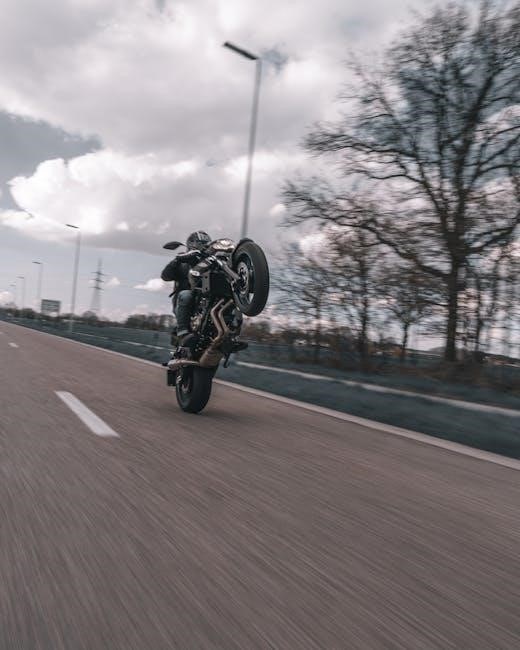
Manuals generally present a less steep learning curve than wheelies, focusing on balance, while wheelies demand precise throttle and clutch coordination.
Learning Curve for Manuals
Manuals typically offer a more accessible entry point for riders seeking to improve bike control. The initial focus centers on mastering balance and weight shifting, skills developed through consistent practice.
Resources like online tutorials and downloadable manuals (found on sites like ManualsLib) provide foundational knowledge. While refinement takes time, achieving a stable manual is often quicker than mastering a controlled wheelie, requiring less aggressive throttle and clutch work.
Learning Curve for Wheelies
Wheelies present a steeper learning curve, demanding precise coordination of throttle, clutch, and body positioning. Mastering the “balance point” requires significant practice and can initially feel unstable.
Unlike manuals, wheelies often involve a higher risk of losing control, necessitating advanced protective gear and a controlled environment. While online video tutorials abound, consistent refinement is crucial, often exceeding the time needed to confidently execute manuals.

The Role of Manuals in Learning Wheelies
Manuals build foundational balance and clutch control, skills directly transferable to wheelies, easing the transition and enhancing overall motorcycle mastery.
Using Manuals to Improve Balance
Manuals demand precise weight shifting and core engagement, fostering a heightened sense of balance crucial for more complex maneuvers. Mastering the manual builds proprioception – awareness of your body in space – directly aiding wheelie control.
Consistent practice refines this balance, allowing riders to intuitively adjust and maintain stability, a skill essential for holding the delicate balance point required during a wheelie. Online resources and guides, like those found on ManualsLib, emphasize this connection.
Developing Clutch Control
Manuals necessitate subtle clutch manipulation to maintain the lifting force without stalling, building exceptional control. This refined clutch feel directly translates to wheelies, where precise engagement is vital for initiating and sustaining the lift.
Resources like Manualsdir.ru offer guides showcasing these techniques, emphasizing how mastering clutch work in a manual lays the foundation for successful power and clutch-up wheelies.

Finding Manuals Online
Manuals and guides for both techniques are readily available on platforms like ManualsLib, boasting over 53,458 documents, and Manualsdir.ru’s 700,000+ files.
ManualsLib and Similar Resources
ManualsLib stands out as a valuable online repository, offering convenient access to a vast collection of over 53,458 readily readable instructions, continually expanding its database.
Alongside ManualsLib, resources like Manualsdir.ru provide extensive searchable libraries, exceeding 700,000 files in PDF format, catering to both manual and wheelie technique exploration. Users can also contribute, enhancing the collective knowledge base.
PDF Manual Databases
Numerous online platforms specialize in hosting extensive PDF manual databases, facilitating access to crucial information for mastering motorcycle control, including manuals and wheelies.
These resources, boasting over 832,743 documents, offer free downloads of service guides and product documentation. ManualLib.com exemplifies this, providing a searchable library for enthusiasts seeking detailed instructions and technical specifications.
Finding Wheelie Tutorials and Guides
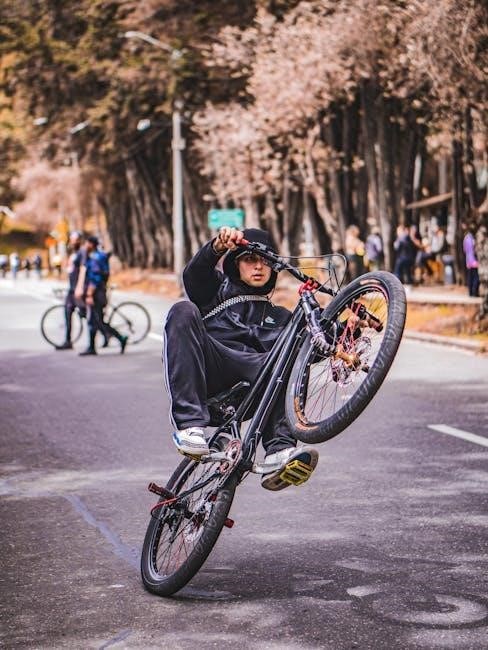
Wheelie mastery often requires visual learning; online video tutorials and specialized stunt riding schools provide comprehensive guidance, building upon manual skills.
Online Video Tutorials
Numerous platforms host tutorials demonstrating both manuals and wheelies, catering to diverse skill levels. These resources visually break down complex techniques, often showcasing progression from foundational balance exercises – like mastering a controlled manual – to executing full wheelies.
Many instructors emphasize that a solid manual foundation is crucial for developing the clutch control and balance necessary for safe and consistent wheelie performance. Searching for specific keywords yields a wealth of instructional content.
Stunt Riding Schools and Instructors
Professional stunt riding schools offer structured training in both manuals and wheelies, providing personalized guidance and safety oversight. Instructors typically advocate mastering the manual first, as it builds essential balance and clutch control – skills directly transferable to wheelie execution.
These schools emphasize controlled environments and progressive learning, ensuring students develop a solid foundation before attempting more advanced techniques, minimizing risks associated with self-taught methods.
Legal Considerations
Performing manuals and wheelies on public roads is generally restricted due to safety concerns and local traffic laws; private property requires explicit permissions.
Public Road Restrictions
Executing manuals and wheelies on public roadways often violates traffic regulations, potentially leading to fines or legal repercussions. These maneuvers are typically deemed unsafe for mixed traffic environments, prioritizing public safety above stunt performance.
Many jurisdictions specifically prohibit such displays of vehicle control, classifying them as reckless driving or endangering others. Always verify local laws before attempting these skills, ensuring compliance and responsible riding practices.
Private Property Permissions
Performing manuals and wheelies requires explicit permission from private property owners to avoid trespassing and potential legal issues. Secure written consent outlining permitted activities and liability waivers before practicing these skills on non-public land.
Responsible stunt riding necessitates respecting property rights and minimizing disturbance to surrounding areas. Prioritizing safety and legal compliance fosters a positive environment for motorcycle enthusiasts.
Advanced Techniques: Combining Manuals and Wheelies
Mastering seamless transitions between manuals and wheelies demands refined balance, clutch control, and throttle management – skills honed through dedicated practice.
Manual to Wheelie Transitions
Successfully linking a manual into a wheelie requires a smooth, progressive application of throttle while maintaining the rear wheel’s elevated position. This transition leverages the balance and clutch control developed during manual practice.
Essentially, the rider subtly increases power as they shift weight backward, initiating the wheelie from the manual’s balanced state. Precise timing and coordination are crucial, avoiding abrupt movements that could disrupt control, as documented in various online stunt riding guides.
Wheelie to Manual Transitions
Transitioning from a wheelie back to a manual involves delicately reducing throttle and simultaneously shifting weight forward, encouraging the front wheel to descend while maintaining rear wheel elevation.
This maneuver demands refined balance and clutch modulation, skills honed through dedicated practice. Mastering this requires a controlled descent, seamlessly blending the power of a wheelie with the balance of a manual, as detailed in numerous online tutorials and stunt riding resources.
Troubleshooting Common Problems
Manuals often result in stalling or falling, while wheelies can lead to loop-outs or loss of control – both require practice and refined technique.
Manuals: Stalling and Falling
Stalling during a manual frequently occurs from insufficient throttle or abrupt clutch engagement, disrupting the delicate balance needed to maintain lift. Falling typically results from leaning too far back or losing forward momentum, causing the bike to tip over.
Unlike wheelies, which benefit from power and rear-wheel traction, manuals rely purely on balance and control; therefore, smooth inputs are crucial to avoid these common pitfalls. Consistent practice builds muscle memory and improves responsiveness.
Wheelies: Loop-outs and Loss of Control
Loop-outs in wheelies happen when excessive throttle causes the bike to pitch backward too aggressively, potentially leading to a violent fall. Loss of control often stems from improper throttle modulation or failing to steer correctly while airborne.
Compared to manuals, wheelies involve managing power and momentum; therefore, quick reactions and precise adjustments are vital. Unlike a manual’s static balance, wheelies demand constant correction.

The Future of Manuals and Wheelies
Technological advancements will likely refine training methods for both, while evolving stunt styles will push the boundaries of manual and wheelie execution.
Technological Advancements in Training
Emerging technologies promise to revolutionize how riders learn manuals and wheelies. Sophisticated simulation software, coupled with virtual reality, can offer risk-free practice environments. Data analytics, tracking rider movements and bike dynamics, will provide personalized feedback.
Online platforms, like those hosting PDF manuals and video tutorials, will integrate these tools, creating comprehensive learning ecosystems. This shift aims to accelerate skill development and enhance safety for both techniques.
Evolving Stunt Riding Styles
Modern stunt riding increasingly blends manuals and wheelies into fluid, complex sequences, demanding exceptional bike control and rider coordination. Competitions now prioritize creativity and seamless transitions between these skills.
The accessibility of online tutorials and shared knowledge, via resources like Manualsdir.ru, fuels this evolution, inspiring riders to push boundaries. Expect to see more integrated, acrobatic performances showcasing both techniques.