

Understanding your 2017 Jeep Grand Cherokee begins with the owner’s manual. It details features, operation, maintenance, and safety – essential for a positive ownership experience.
Overview of the Vehicle
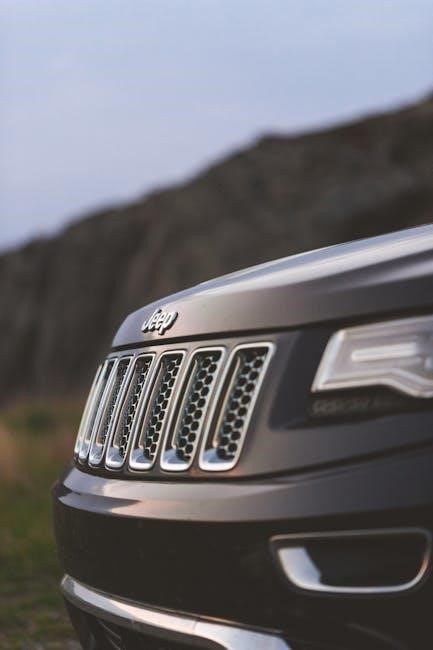
The 2017 Jeep Grand Cherokee represents a compelling blend of luxury, capability, and technology within the mid-size SUV segment. Offered in a variety of trims – Laredo, Limited, Trailhawk, Overland, and Summit – it caters to diverse driver preferences. This vehicle boasts a robust selection of engines, ranging from a 3.6-liter V6 to powerful V8 options, ensuring ample performance for both daily commutes and off-road adventures.
Key features include available four-wheel drive systems, sophisticated suspension setups, and a spacious, well-appointed interior. The Grand Cherokee prioritizes passenger comfort and cargo capacity, making it suitable for families and individuals alike. Understanding the intricacies of its systems, as detailed in the owner’s manual, is crucial for maximizing its potential. The manual provides insights into the vehicle’s various components, operational procedures, and recommended maintenance schedules, ultimately enhancing the ownership experience and ensuring long-term reliability.
Importance of the Owner’s Manual
The 2017 Jeep Grand Cherokee owner’s manual is far more than just a collection of pages; it’s your comprehensive guide to understanding and maintaining this sophisticated vehicle. It details every aspect, from basic operation of features like Uconnect and safety systems, to intricate maintenance schedules and troubleshooting procedures. Ignoring the manual can lead to improper vehicle operation, potentially causing damage or compromising safety;
Specifically, the manual outlines crucial information regarding the vehicle’s various systems – engine, transmission, brakes, and more – ensuring you’re equipped to address minor issues or recognize when professional service is required. It also clarifies warranty details and provides essential emergency contact information. Familiarizing yourself with its contents empowers you to optimize performance, prolong the vehicle’s lifespan, and fully enjoy the capabilities of your 2017 Jeep Grand Cherokee. It’s a vital resource for responsible ownership.
Understanding Your Vehicle
The 2017 Jeep Grand Cherokee’s functionality is revealed in its manual. Learn about dashboard symbols, key controls, seating, and safety features for optimal use.
Dashboard Symbols and Indicators
The 2017 Jeep Grand Cherokee’s dashboard utilizes a comprehensive system of symbols and indicators to communicate vital vehicle information to the driver. Understanding these alerts is crucial for safe and informed operation. The owner’s manual provides detailed explanations for each icon, categorized by severity – from informational lights to warnings requiring immediate attention.
Key indicator lights include those for the engine, transmission, braking system (ABS), airbag deployment, and tire pressure monitoring system (TPMS). Ignoring a warning light can lead to more significant mechanical issues or compromise safety. The manual clarifies the difference between steady, flashing, and intermittent lights, each signifying a different level of urgency.
Furthermore, the dashboard displays indicators for features like cruise control, four-wheel drive engagement, and various system statuses. Familiarizing yourself with these symbols ensures you’re fully aware of your vehicle’s operating condition. Refer to the owner’s manual for a complete visual guide and detailed descriptions of all dashboard symbols and indicators present in your 2017 Jeep Grand Cherokee.
Key Features and Controls
The 2017 Jeep Grand Cherokee boasts a wide array of features, and the owner’s manual serves as your guide to mastering them. This section details the location and operation of essential controls, ensuring a comfortable and confident driving experience. Key features include the Uconnect infotainment system, climate controls, and various driver-assistance technologies.
The manual provides step-by-step instructions for adjusting seats, mirrors, and the steering wheel, optimizing your driving position. It also explains the functionality of power windows, door locks, and the vehicle’s security system. Understanding the operation of the Grand Cherokee’s lighting system, windshield wipers, and cruise control is also covered.
Furthermore, the manual details the use of features like the rear liftgate, sunroof, and available premium sound system. It’s essential to familiarize yourself with these controls to fully enjoy the capabilities of your vehicle. Refer to the owner’s manual for detailed diagrams and explanations of all key features and controls within the 2017 Jeep Grand Cherokee.
Seating and Safety Restraints
The 2017 Jeep Grand Cherokee prioritizes passenger safety, and the owner’s manual provides crucial information regarding seating and restraint systems. This section details proper seat adjustments, head restraint positioning, and the correct usage of all safety belts – front and rear. Understanding these features is paramount for occupant protection in the event of a collision.
The manual offers specific guidance on child safety restraint systems (CSRS), including LATCH (Lower Anchors and Tethers for CHildren) compatibility and proper installation procedures. It emphasizes the importance of selecting age- and weight-appropriate restraints and securing them correctly. Detailed diagrams illustrate the correct placement of CSRS within the vehicle.
Furthermore, the manual explains the operation of the Grand Cherokee’s airbag system, including supplemental restraint system (SRS) indicators and precautions. It’s vital to understand the limitations of airbags and the potential risks associated with improper usage. Always consult the owner’s manual for comprehensive information on seating configurations and safety restraint systems within your 2017 Jeep Grand Cherokee.
Operating Your Vehicle
The 2017 Jeep Grand Cherokee’s owner’s manual details essential operating procedures. Learn about starting, driving modes, fuel requirements, and routine fluid level checks for optimal performance.
Starting and Stopping the Engine
Starting Your Engine: Before starting, ensure the vehicle is in Park (P) or Neutral (N), and the parking brake is engaged. Insert the key into the ignition or, if equipped, press the Start/Stop button while firmly pressing the brake pedal. The engine will crank and start. If the engine doesn’t start, refer to the troubleshooting section of your owner’s manual.
Stopping Your Engine: To stop the engine, gently apply the brake pedal and shift the transmission into Park (P). Then, turn the ignition key to the OFF position or press the Start/Stop button. Allow the engine to fully stop before removing the key or exiting the vehicle. Avoid abruptly turning off the engine while driving, as this can affect vehicle control.
Remote Start (if equipped): The 2017 Grand Cherokee may feature remote start. Consult your owner’s manual for specific instructions on using this feature, including safety precautions and operating range. Proper usage ensures a smooth and safe remote start experience.
Driving Modes and Systems
Select-Terrain System: The 2017 Jeep Grand Cherokee boasts the Select-Terrain system, offering multiple driving modes – Auto, Snow, Sport, Sand/Mud, and Rock (on Trailhawk models). These modes adjust vehicle settings for optimal performance in various conditions. Refer to your owner’s manual for detailed explanations of each mode and recommended usage scenarios.
Quadra-Trac I/II & Quadra-Drive II: Depending on the trim level, your Grand Cherokee may feature one of these 4×4 systems. Quadra-Trac I is full-time 4WD, while Quadra-Trac II adds a low-range gear. Quadra-Drive II incorporates a rear electronic limited-slip differential. The manual details how each system operates and when to engage 4-Low.
Electronic Stability Control (ESC): ESC helps maintain vehicle control during challenging maneuvers. It’s generally best to leave ESC enabled, but the system can be partially disabled for specific off-road situations – consult the owner’s manual for safe operation guidelines.
Fueling and Fluid Checks
Fuel Requirements: Your 2017 Jeep Grand Cherokee typically requires unleaded gasoline with an octane rating of 87 or higher. The owner’s manual specifies the exact fuel capacity, varying slightly by engine option. Always refer to the manual for the most accurate information and avoid using fuels with excessive ethanol content.
Fluid Level Checks: Regularly inspect engine oil, coolant, brake fluid, power steering fluid, and windshield washer fluid levels. The manual provides step-by-step instructions and diagrams for locating and checking each fluid reservoir. Low fluid levels can indicate leaks or require topping off.
Oil Type & Capacity: The recommended oil type and capacity depend on your engine. The manual details the correct viscosity grade (e.g., 5W-20) and the amount of oil needed during an oil change. Using the wrong oil can negatively impact engine performance and longevity. Always dispose of used oil responsibly.

Maintenance and Care
Regular maintenance, as outlined in your 2017 Jeep Grand Cherokee’s owner’s manual, is crucial. It ensures optimal performance, reliability, and extends the vehicle’s lifespan.
Scheduled Maintenance
Your 2017 Jeep Grand Cherokee’s owner’s manual provides a detailed schedule for routine maintenance. Following this schedule is vital for maintaining peak performance and preventing costly repairs. Key intervals include oil and filter changes, typically every 7,500 to 10,000 miles depending on driving conditions and oil type.
Regular inspections of fluids – coolant, brake fluid, power steering fluid, and transmission fluid – are also essential, with recommended replacement intervals specified in the manual. Tire rotations should occur every 5,000 to 8,000 miles to ensure even wear and maximize tire life.
Furthermore, the manual outlines specific service requirements at higher mileage milestones, such as spark plug replacement, air filter changes, and inspection of belts and hoses. Adhering to these recommendations will help preserve your Grand Cherokee’s value and ensure its long-term reliability. Don’t neglect these crucial steps!
Tire Information and Maintenance
The 2017 Jeep Grand Cherokee’s owner’s manual details crucial tire information, including the correct tire size, load capacity, and recommended inflation pressure. Maintaining proper tire pressure – found on the driver’s side doorjamb – is essential for optimal handling, fuel efficiency, and tire longevity. Regularly check pressure, especially with temperature changes.
The manual also outlines tire rotation procedures, typically every 5,000 to 8,000 miles, to promote even wear. Inspect tires for damage, such as cuts, bulges, or uneven tread wear. Understanding the tire tread wear indicators is vital for knowing when replacement is necessary.
Furthermore, the manual specifies the correct tire type for your Grand Cherokee and provides guidance on winter tire usage if applicable. Proper tire maintenance significantly impacts safety and performance, so consult the manual for detailed instructions and recommendations. Ignoring these details can be dangerous!
Fluid Specifications and Capacities
The 2017 Jeep Grand Cherokee owner’s manual provides a comprehensive list of required fluid types and their corresponding capacities. This is critical for performing routine maintenance and repairs correctly. Using the wrong fluid can cause significant damage to your vehicle’s systems.
The manual details specifications for engine oil (including viscosity grades for different climates), coolant, transmission fluid, brake fluid, power steering fluid, and windshield washer fluid. It also lists the exact capacity for each fluid, ensuring you purchase the correct amount.

Referencing this section prevents overfilling or underfilling, both of which can negatively impact performance. The manual may also specify fluid standards (like Dex-Cool for coolant) and acceptable alternatives. Always prioritize using fluids meeting the manufacturer’s specifications for optimal vehicle health and longevity.
In-Vehicle Technology
The 2017 Jeep Grand Cherokee’s technology is detailed in the owner’s manual. Learn about Uconnect, Bluetooth, navigation, and other features for optimal use.
Uconnect System Overview
The Uconnect system is the heart of the 2017 Jeep Grand Cherokee’s infotainment experience. This comprehensive system, thoroughly explained in your owner’s manual, integrates various functions into an intuitive touchscreen interface. It controls audio, navigation, climate control, and vehicle settings.
Uconnect offers multiple screen sizes depending on the trim level, ranging from 5-inch to 8.4-inch displays. The manual details how to navigate the menus, customize the home screen, and utilize features like drag-and-drop widgets. It also explains voice command functionality, allowing hands-free operation of many system features.
Connectivity is a key aspect of Uconnect. The owner’s manual provides instructions on pairing smartphones via Bluetooth for hands-free calling and audio streaming. It also covers USB connectivity for media playback and device charging. Understanding Uconnect’s capabilities, as outlined in the manual, enhances both convenience and safety while driving.
Bluetooth Pairing and Usage
The 2017 Jeep Grand Cherokee’s Uconnect system facilitates seamless Bluetooth connectivity, detailed extensively within your owner’s manual. Pairing your smartphone allows for hands-free calling, audio streaming, and voice command functionality, enhancing safety and convenience.
The manual guides you through the pairing process, which typically involves navigating to the Bluetooth settings on the Uconnect touchscreen and enabling “discovery mode” on your phone. Once detected, you’ll be prompted to enter a PIN (often ‘0000’) to confirm the connection. The manual clarifies potential troubleshooting steps if pairing fails.
Once paired, the Uconnect system can access your phone’s contacts and call history. The manual explains how to initiate and answer calls using voice commands or the touchscreen. It also details how to stream music from your phone, control playback, and adjust volume. Proper understanding of these features, as described in the manual, maximizes the Bluetooth experience.
Navigation System Details
The 2017 Jeep Grand Cherokee’s navigation system, thoroughly explained in the owner’s manual, offers turn-by-turn directions, points of interest (POI) searches, and real-time traffic updates (subscription may be required). The manual details how to input destinations using address, coordinates, or POI categories.

It clarifies the system’s map display options, including 2D and 3D views, and how to customize settings like route preferences (fastest, shortest, avoid tolls). The manual also explains how to utilize the voice recognition feature for hands-free destination entry and command control. Understanding the system’s limitations, such as map coverage and update availability, is crucial.
Furthermore, the manual details how to manage saved locations, review route history, and troubleshoot common issues like GPS signal loss or incorrect map data. Regularly updating the navigation system’s map data, as outlined in the manual, ensures accurate and reliable guidance during your journeys.

Troubleshooting and Emergency
The owner’s manual provides vital guidance for roadside assistance, jump-starting, and emergency contacts. It details procedures for common issues and safety protocols.
Jump Starting Procedures
If your 2017 Jeep Grand Cherokee battery is depleted, a jump start can get you going. However, following the correct procedure is crucial to avoid damage to the vehicle’s electrical system. First, position a second vehicle close enough for the jumper cables to reach, but ensure the vehicles aren’t touching.
Turn off both vehicles. Connect the red (positive) cable to the positive terminal of the discharged battery, then to the positive terminal of the good battery. Next, connect the black (negative) cable to the negative terminal of the good battery, and finally, to a solid, unpainted metal surface on the disabled Grand Cherokee – not the negative battery terminal.
Start the good vehicle and let it run for a few minutes. Then, attempt to start the Grand Cherokee. If it starts, let both vehicles run connected for several minutes before disconnecting the cables in the reverse order of connection. Consult your owner’s manual for specific diagrams and warnings related to jump-starting your vehicle.
Towing Information
The 2017 Jeep Grand Cherokee’s towing capacity varies significantly based on engine, drivetrain, and axle ratio. Always consult your owner’s manual for the precise towing capacity of your specific vehicle configuration. Exceeding the maximum towing weight can compromise vehicle control and damage components.
When towing, use a trailer with properly functioning brakes and safety chains. Ensure the trailer’s weight is distributed correctly to maintain stability. A weight-distributing hitch is recommended for heavier loads. Before towing, verify the trailer wiring is compatible with your Grand Cherokee’s wiring harness.
The manual details proper hitch receiver selection, ball mount height, and trailer lighting requirements. It also outlines recommended driving practices when towing, such as reduced speeds and increased following distances. Regularly inspect towing equipment for wear and damage. Ignoring these guidelines can lead to accidents and costly repairs.
Emergency Contact Information
Your 2017 Jeep Grand Cherokee owner’s manual provides crucial emergency contact details. For roadside assistance in the US and Canada, contact the Jeep Roadside Assistance program – the number is listed within the manual, typically found in the ‘Services and Assistance’ section. This service covers jump starts, tire changes, fuel delivery, and towing.
The manual also includes contact information for the Jeep Customer Assistance center, useful for general inquiries or warranty concerns. In case of an accident, the manual directs you to local emergency services – dial 911 in the US and Canada. It’s vital to have this information readily accessible.
Furthermore, the manual may contain details regarding vehicle theft reporting and insurance claim procedures. Keep a copy of your vehicle identification number (VIN) and insurance policy information with your manual for quick reference during emergencies. Prior preparation can significantly reduce stress in critical situations.